
The Fire We Carry
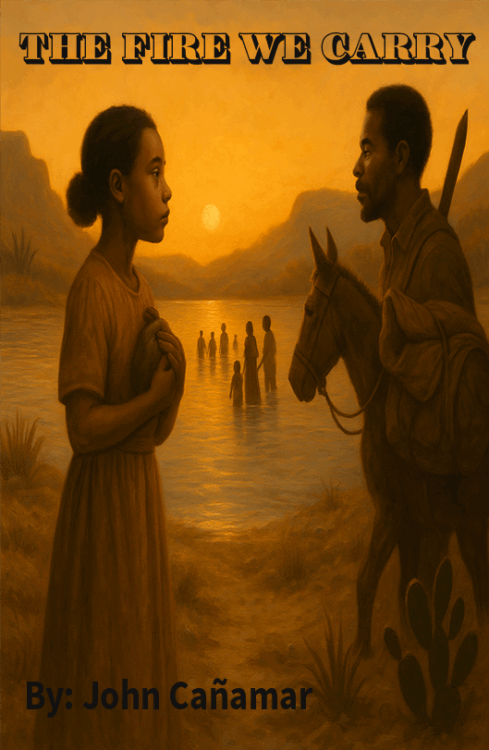
“The Fire We Carry” tells the fictional yet historically-inspired story of Amara, a young Black Seminole girl whose journey embodies the remarkable history of a resilient community. Beginning in 1837 Florida, Amara and her family are part of a community of formerly enslaved African Americans who found refuge among the Seminole Nation. When U.S. soldiers attack their village during the Seminole Wars, Amara and her younger brother Zeke are forced to flee, beginning a harrowing journey westward as part of what would become known as the Trail of Tears.
After reaching Indian Territory (present-day Oklahoma), Amara’s community faces new threats as bounty hunters and slave catchers continue to pursue them despite their supposed protected status. Led by historical figures like John Horse and Chief Wild Cat, the group makes the dangerous decision to escape southward, crossing Texas toward the Rio Grande and the promise of freedom in Mexico, where slavery had been abolished. Their perilous journey tests their courage and determination as they evade capture while traveling through hostile territory.
Upon reaching Mexico in the 1850s, the group is recognized by the Mexican government and permitted to establish a settlement called Nacimiento in Coahuila. There, they become known as Los Negros Mascogos and begin building a new life as border scouts and defenders for Mexico. Through Amara’s eyes, we witness the community’s transformation as they create a unique cultural identity that honors their African, Seminole, and Mexican heritage while establishing traditions that will sustain future generations.
Meet the Characters
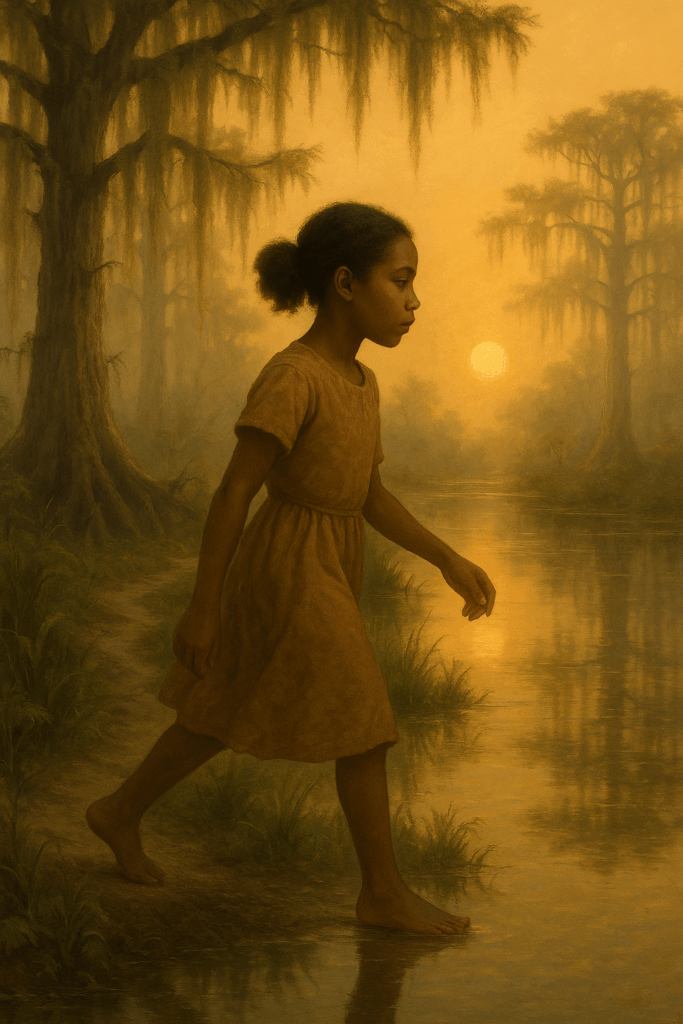
Amara
Amara is a resilient young Black Seminole girl whose life embodies the extraordinary journey of her people. Born in the swamps of Florida in the 1820s, she grows up in a community of formerly enslaved African Americans who found refuge and alliance with the Seminole Nation. Raised by her father, a respected warrior and former runaway, and her mother, a skilled healer knowledgeable in both African and Seminole remedies, Amara develops a deep connection to the lush Florida wilderness and learns to navigate its waterways and forests with confidence.
When U.S. soldiers attack her village during the Seminole Wars in 1837, Amara, still a child, is forced to flee with her younger brother Zeke. After losing her mother to fever during their forced relocation to Indian Territory (Oklahoma), Amara demonstrates remarkable strength by caring for her brother while helping her community survive in harsh and unfamiliar lands. As threats from bounty hunters and slave catchers persist, Amara joins her father and community leaders in the dangerous decision to escape to Mexico.
During the perilous journey across Texas and the Rio Grande, Amara’s courage and determination shine as she helps guide her people toward freedom. Upon reaching Nacimiento, Mexico in the early 1850s, teenage Amara becomes instrumental in building their new community. She helps establish a school, teaches children multiple languages, and meticulously documents her people’s oral histories in a journal she titles “The Fire We Carry.” As she matures, Amara emerges as a cultural guardian and storyteller, ensuring that the legacy of the Black Seminoles—later known as Los Negros Mascogos—will be preserved for generations to come. Her written accounts eventually become treasured family heirlooms, connecting her descendants to their remarkable heritage of resistance, resilience, and freedom.
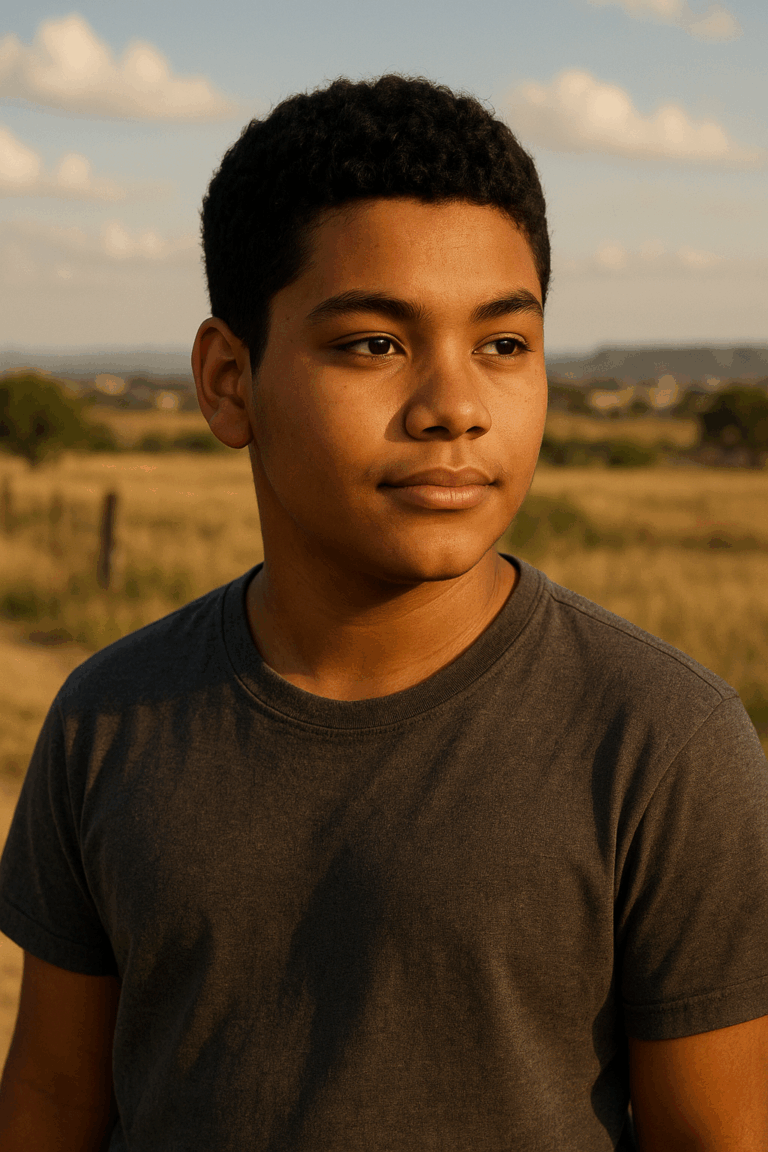
Isaiah
Isaiah is a modern-day descendant of the Black Seminole community who initially feels disconnected from his ancestral heritage. Growing up in Texas, he has heard stories about his Mascogo ancestors from his Tío Santiago but viewed them as distant history rather than a living legacy that shapes his identity. As a contemporary teenager more connected to modern American culture, Isaiah approaches his family’s annual trip to Nacimiento, Coahuila for Juneteenth celebrations with skepticism, questioning why they celebrate an American holiday in Mexico.
Isaiah’s perspective transforms dramatically during his visit to Nacimiento, where he encounters the living history of the community his ancestors built. Through his uncle’s storytelling and his discovery of Amara’s leather-bound journal—written by his great-great-great-grandmother—Isaiah begins to feel a profound connection to the struggles and triumphs of the Black Seminoles. The physical experience of walking the same paths, touching the same river, and participating in cultural traditions bridges the gap between past and present in ways history books never could.
Finding inspiration in Amara’s writings and the vibrant cultural practices still maintained in Nacimiento, Isaiah embraces his heritage through music, creating songs that blend traditional Creole hymns with contemporary styles. His performance at the Juneteenth ceremony marks his personal transformation from a disconnected observer to an active participant in preserving and evolving his cultural legacy. Through Isaiah’s journey, we see how ancestral stories can ignite a sense of belonging and purpose in younger generations, as he takes up the mantle of cultural guardian by finding his own way to “carry the fire” of his people’s remarkable history into the future.
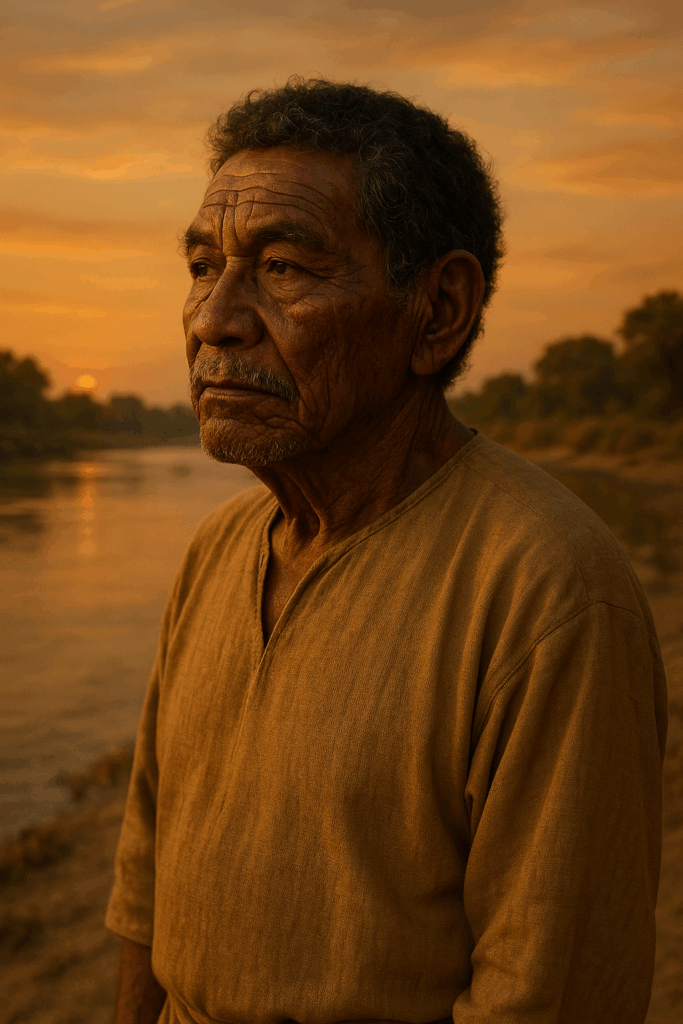
Tio Santiago
Tío Santiago is a respected elder and cultural guardian of the Black Seminole/Mascogo community who serves as the crucial bridge between generations. Born and raised in Nacimiento, Coahuila, he embodies the living history of his people with his wiry frame, skin “the color of rich soil,” and eyes described as “like dusty marbles” that have witnessed decades of his community’s ongoing struggle and resilience. Santiago grew up immersed in the oral traditions of the Mascogos, learning their stories, songs, and cultural practices directly from elders who remembered the original journey from Florida to Mexico.
As an adult, Santiago dedicated himself to preserving the Mascogo heritage through storytelling and community leadership. He became particularly skilled at communicating complex historical narratives in ways that resonate with younger generations, using vivid imagery and personal connection to make distant events feel immediate and relevant. Though he moved away from Nacimiento at some point in his life—likely to Texas where part of his family now resides—Santiago maintains deep ties to the ancestral homeland and returns regularly for important cultural celebrations, especially Juneteenth, which holds special significance for the Mascogo community.
Santiago recognizes the growing disconnect between modern youth like his nephew Isaiah and their cultural heritage, but approaches this challenge with patience and wisdom rather than judgment. His gentle guidance during Isaiah’s visit to Nacimiento demonstrates his understanding that cultural identity cannot be forced but must be discovered through personal experience and connection. When he invites Isaiah to help carry the ceremonial drums and later acknowledges his nephew’s musical tribute with the quiet affirmation “You found the fire. Now pass it on,” Santiago fulfills his most important role—ensuring that the remarkable story of the Black Seminoles continues to inspire and shape future generations who will carry their legacy forward in new and evolving ways.